Kiln Riding Ring and Shell Pad Replacement: What Must Be Measured?
A kiln riding ring, also called a kiln tyre, must be considered together with its mounting arrangement and shell interfaces. For a replacement enquiry, identify the tyre, pads or chairs, retaining features and shell section separately. An outside diameter and a TPD label are not enough to establish compatibility.
The purpose of the measurement record is to let engineering distinguish the existing condition from the intended replacement design. It should not become an instruction to modify clearances while a kiln operates.
Establish the mounting arrangement first
Some enquiries cover only a riding ring; others include chair pads or a shell section with fitted mounting components. Record the actual arrangement from approved drawings. Do not assume all kilns use an identical relationship between the tyre and shell.
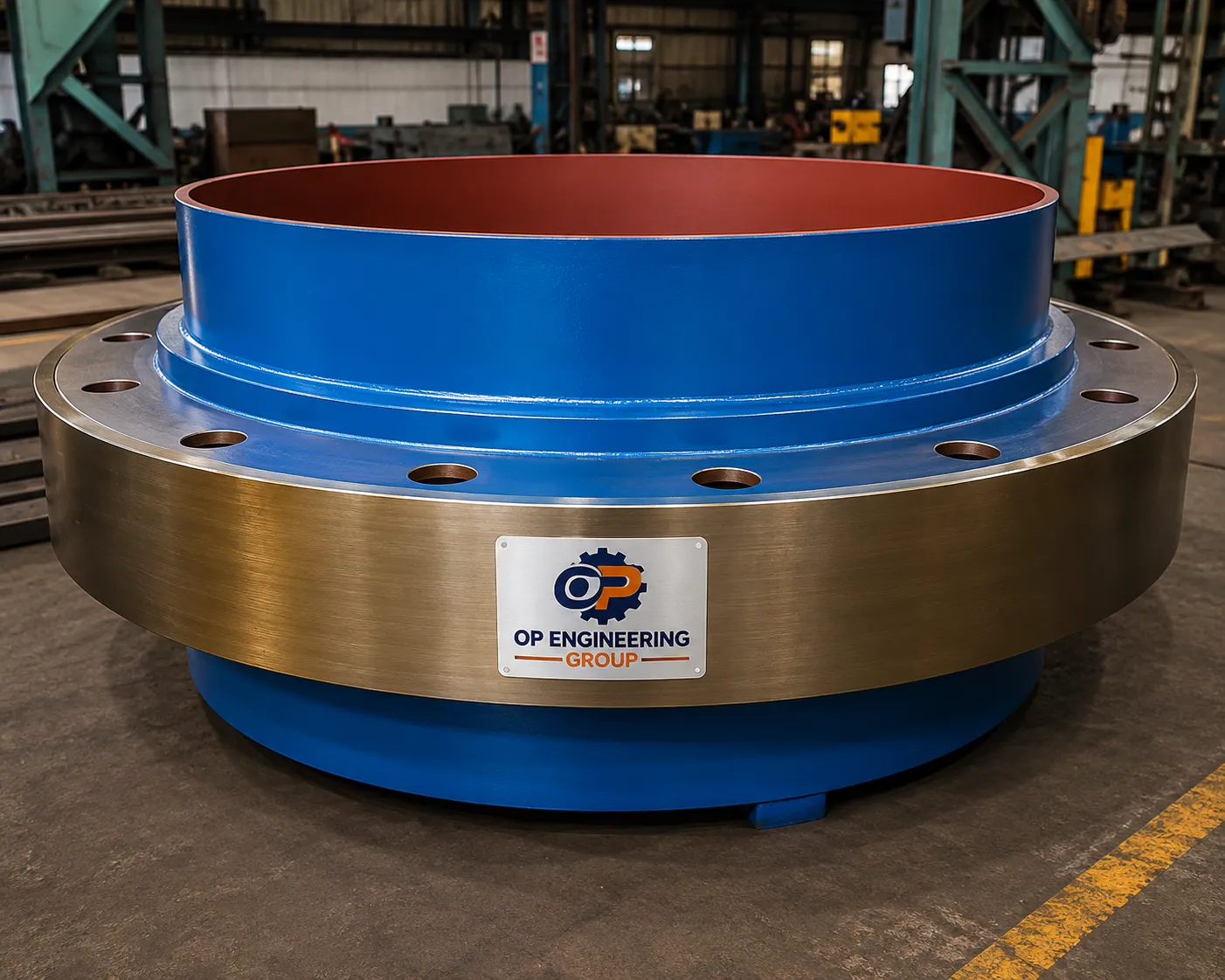
OP's catalogue includes a riding chair pad fitted with shell section and a separate kiln tyre riding ring. These names help identify enquiry scope; they do not prove the two entries fit a particular installation.
Engineering insight: measurement conditions are part of the data
A dimension without its measurement location, reference and thermal condition is incomplete. A cold shutdown reading and a reading taken under operating conditions should not be treated as interchangeable. Label the condition and method; let the responsible engineer define which measurements are needed and how to take them safely.
FLSmidth Cement's kiln maintenance scope includes tyre/roller work and kiln evaluation. This supports system-level assessment, not any universal clearance value. No hot-work, lifting or alignment procedure is supplied in this article.
Buyer resource: tyre and pad measurement brief
Identity and drawings
- Kiln OEM, equipment tag and support-station identification.
- Tyre, shell-section and pad arrangement drawings with revisions.
- Existing material records and previous replacement history, if available.
- Marked photographs identifying the requested components.
Measurement and condition record
- Reference datums and measurement method agreed by engineering.
- Recorded diameters, widths and mounting-interface dimensions.
- Thermal condition, date and operating/shutdown state.
- Pad and retaining-feature condition, with location identifiers.
- Relevant inspection findings and any known shell distortion.
Supply and acceptance
- Individual items versus preassembled shell/pad scope.
- Material, welding and examination requirements where applicable.
- Defined acceptance criteria and final dimensional report.
- Site installation responsibility, transport limits and outage date.
Avoid these purchasing shortcuts
Do not infer pad dimensions from tyre width alone. Do not copy clearances from another plant with the same capacity. Do not adopt a repair allowance from a photograph. For a revised design, request an approved drawing rather than treating a supplier's verbal suggestion as the released specification.
Frequently asked questions
Are tyre, tire and riding ring different products?
They often describe the same component. Confirm the actual drawing and mounting arrangement rather than creating separate specifications for spelling variants.
Is a shell section always needed with a new tyre?
No. Condition and approved replacement scope determine which items are required.
Can the plant's TPD select a riding ring?
No. Production capacity does not replace geometric and design information.
Prepare your replacement enquiry
Visit the cement mill rotary kiln catalogue. Send approved drawings, marked measurements and required scope to info@opengineeringgroup.com or use the contact page.


