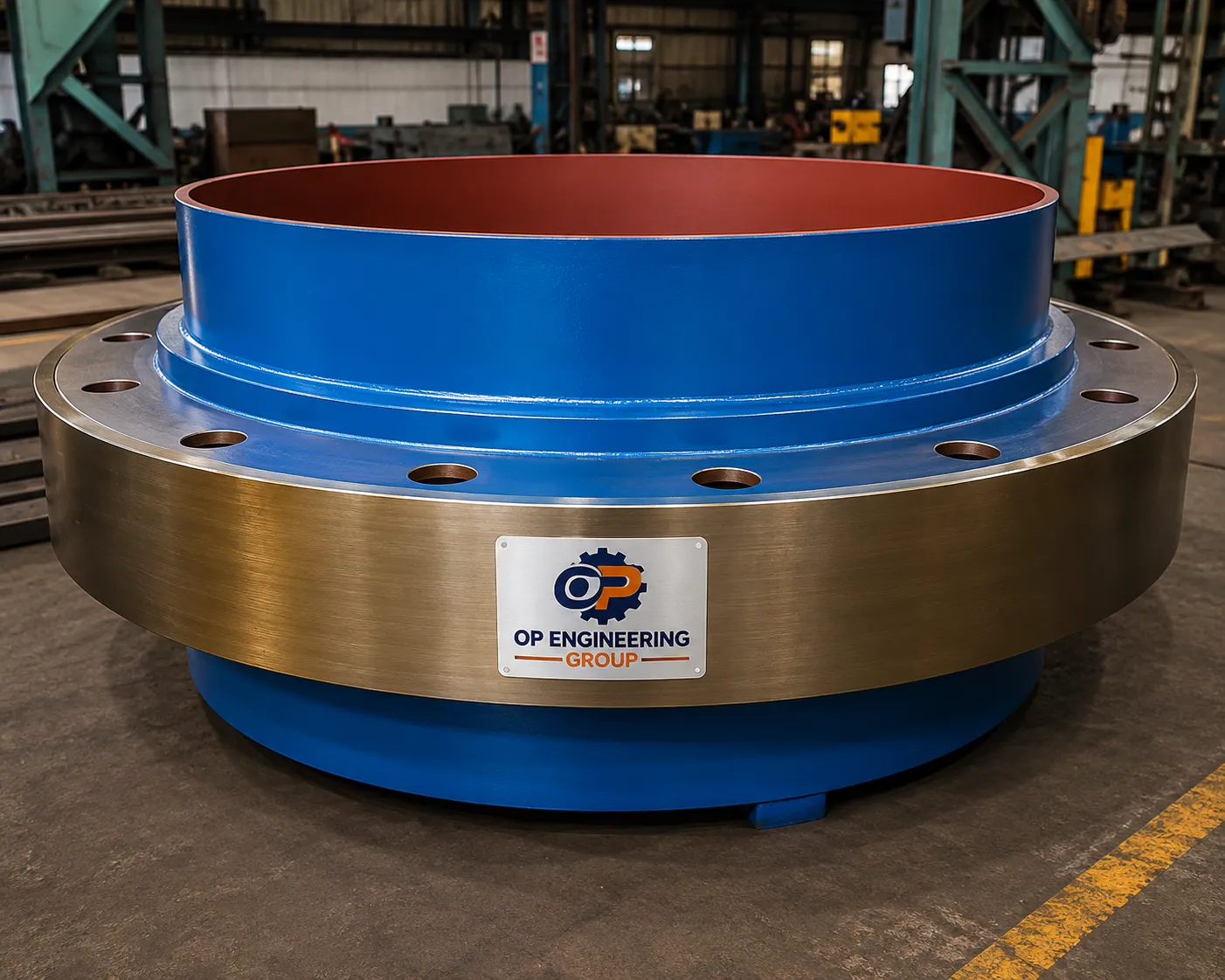
Kiln Support Roller: Bare Roller, Roller with Shaft or Complete Assembly?
A kiln support roller enquiry must define what is being purchased: the roller body alone, a roller mounted on its shaft, or an assembly including agreed bearings, housings and mounting components. These scopes are not interchangeable. A plant capacity such as 100 or 350 TPD identifies production duty, not the dimensions of the replacement roller.
For DRI maintenance teams, agreeing this boundary before comparing prices prevents a low-priced bare component from being mistaken for an installation-ready assembly. Use the existing equipment drawing and a written bill of materials as the common quotation basis.
Compare the three supply scopes
Bare roller body
State the bore, running diameter, face width, hub arrangement, material and inspection requirements. Clarify who verifies whether the existing shaft can be reused. A worn shaft should not be accepted solely because a new roller fits over it.
Roller with shaft
Add shaft journals, shoulders, fillets, end features, mounting method and inspection datums. Identify whether assembly and associated inspection are included. Measurements must distinguish intended drawing dimensions from wear on the removed part.
Complete supporting assembly
List every included item: bearings or bushes, housings, covers, seals, fasteners, lubrication connections and base interfaces as applicable. The word complete is not a universal bill of materials. Exclusions such as installation, alignment and foundation work should be explicit.
Engineering insight: a part can fit but still be the wrong replacement
Two rollers with the same outer diameter may have different face widths, shaft seats or bearing arrangements. An assembly could bolt onto a base yet place its running surface at a different position. Treat dimensional compatibility as an interface chain rather than one successful measurement.
FLSmidth Cement's kiln service guidance treats roller work and alignment as related maintenance activities. This does not establish OP's installation scope; that must be agreed in the offer. Do not adjust operating rollers using a generic buying guide.
Buyer resource: assembly comparison worksheet
- Equipment tag, kiln OEM, drawing number and revision.
- Plant capacity with metric-tonne and feed/output basis stated separately.
- Roller, shaft and housing drawings with common datums.
- Reused items, newly supplied items and excluded items.
- Material, heat treatment and agreed acceptance criteria.
- Required dimensional, material and nondestructive examination records.
- Packing, lifting information, delivery location and outage date.
- Responsibility for installation, alignment and commissioning.
Ask each supplier to mark the same worksheet. Compare equivalent accepted scope, not only total quoted weight or delivery time.
Frequently asked questions
Does TPD confirm roller compatibility?
No. Use equipment identity, drawings, load/design requirements and interfaces. TPD is operating context, not a replacement part number.
Can the existing bearing housing be retained?
Possibly, subject to its condition and approved interface review. State retention explicitly rather than assuming a complete assembly includes a new housing.
Is alignment included with supply?
Only if the quotation includes it. Agree site responsibilities before placing the order.
Send a drawing-based enquiry
Review the rotary kiln supporting roller assembly and DRI equipment catalogue. Send drawings and the completed scope checklist through the contact page or info@opengineeringgroup.com. Material grades, inspections and delivery commitments are confirmed in the project-specific offer.