Industrial Chain Sprocket Replacement: Pitch, Teeth and RFQ Checklist
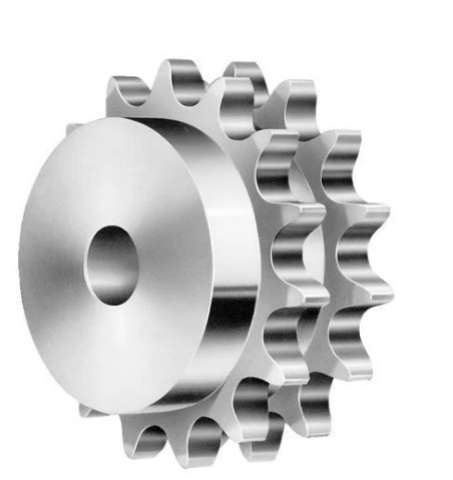
An industrial chain sprocket replacement must match the chain designation, tooth count, number of rows and shaft mounting arrangement. A similar outside diameter does not prove compatibility. To obtain a useful quotation, send the chain reference and approved sprocket drawing together with operating duty, quantity and the delivery location.
OP Engineering Group lists chain sprockets for rolling mill equipment. This article focuses on replacement procurement: how to describe the part, compare offers and avoid losing essential chain-drive information when an old sprocket is sent for assessment.
Identify the chain before specifying the sprocket
Buyers searching for a chain sprocket manufacturer or an industrial sprocket supplier often have an old part but incomplete records. Begin with the chain manufacturer's designation, applicable series and pitch. Include roller dimensions and the number of rows where the specification calls for them. Write the units explicitly; do not silently convert an assumed inch pitch into a rounded metric dimension.
Tooth count is not the complete specification
Two sprockets can have the same number of teeth but belong to different chain series. Tooth form, row spacing and chain engagement still need to match. Record the existing drawing reference and chain details instead of requesting only a “20-tooth sprocket” or relying on a photograph.
Bore, hub and retention arrangement
Specify finished bore size and tolerance, keyway, hub dimensions, overall width and any taper-bush, spline or special mounting arrangement. Identify the shaft shoulder and retaining method. If you require a pilot-bore blank rather than a finished component, say so explicitly because the machining and inspection scope differ.
Engineering insight: changing tooth count changes the drive relationship
In a simple chain drive, the tooth-count relationship determines the ideal speed ratio. For illustration, a 15-tooth driver and a 45-tooth driven sprocket give a 3:1 reduction. This is an explanatory example, not a recommended sprocket selection or a load rating. Changing one tooth count is therefore a drive-design change, not merely a different replacement size.
Preserve the approved count for a like-for-like replacement. If a different speed is required, have the entire arrangement reviewed, including chain suitability, centre distance, tensioning, clearances and connected equipment. Do not ask a supplier to infer the desired drive speed from plant production capacity alone.
Review wear across the chain and sprocket arrangement
Inspect the chain and mating sprockets as a system under the plant's maintenance procedure. Record uneven tooth wear, chain condition, alignment observations and the operating history. A replacement order should state whether related components will remain in service so compatibility can be assessed.
Tsubaki's technical article on sprocket wear explains that wear changes tooth support and can affect chain engagement. Its proprietary wear-indicator method belongs to that product design; it should not be presented as a feature of every sprocket or used to invent a universal rejection limit.
Why an old sample needs context
A worn tooth is not necessarily the original tooth profile. Provide the approved drawing, chain designation and any previous inspection record with the sample. Mark which dimensions are believed to be worn or modified. The supplier should not be left to reproduce damage as though it were the intended design.
Material and inspection agreement
State the approved material and any specified heat treatment, hardness, runout or other inspection requirements. If these records are missing, flag the gap for technical review rather than choosing a grade solely because it is widely advertised online. Documentation requirements and acceptance criteria must be agreed before comparing commercial offers.
Buyer resource: a practical sprocket enquiry template
Copy these fields into your procurement enquiry:
- Plant name, machine tag and chain-drive location.
- Chain make, designation, series, pitch and row count.
- Driver or driven sprocket, tooth count and drawing revision.
- Bore and tolerance, keyway, hub length and overall width.
- Shaft retention arrangement and components to be reused.
- Operating speed, duty, loading observations and drive arrangement.
- Approved material, heat treatment and inspection requirements.
- Quantity, supply scope, delivery address and required date.
- Drawing, identification photographs and relevant sample information.
Use a clear subject such as “Chain sprocket replacement enquiry — equipment tag”. Ask the offer to identify included machining, accessories and documents, as well as any unresolved technical information. This makes a supplier comparison more useful than comparing a unit price against differently defined parts.
Find the right supply scope for your plant
The rolling mill spare parts catalogue helps separate sprocket requirements from other drive components. Where the connected drive also needs assessment, use our gearbox replacement checklist to collect its own mechanical information.
If your enquiry includes a replacement chain as well as a sprocket, list the two items separately and request confirmation of the offered scope. A catalogue listing for sprockets does not by itself establish that every matching chain is manufactured or stocked by the same supplier.
Frequently asked questions
Is chain pitch enough to order a replacement sprocket?
No. Include the complete chain reference, tooth count, row arrangement and mounting dimensions. Pitch alone does not describe the entire assembly.
Can a sprocket be selected from TPH or TPD capacity?
Not reliably. Throughput describes the plant process, while sprocket suitability depends on the actual chain drive, geometry and duty. Send both process context and drive-specific data where available.
Should a new sprocket be fitted to a worn chain?
The chain and mating sprockets need an inspection and compatibility review. Do not assume that replacing only the visibly damaged part resolves the cause of poor engagement.
What if the original drawing is unavailable?
Send the chain reference, identification marks, photographs, measured dimensions and sample availability. Explain missing information so the assessment and drawing approval scope can be agreed before manufacture.
Request an industrial chain sprocket quotation
Send your details to info@opengineeringgroup.com or contact OP Engineering Group in Ghaziabad, Uttar Pradesh. For an initial discussion, start a sprocket WhatsApp enquiry. Prices, manufacturing feasibility and delivery terms are confirmed against the specific requirement, not a generic sprocket description.